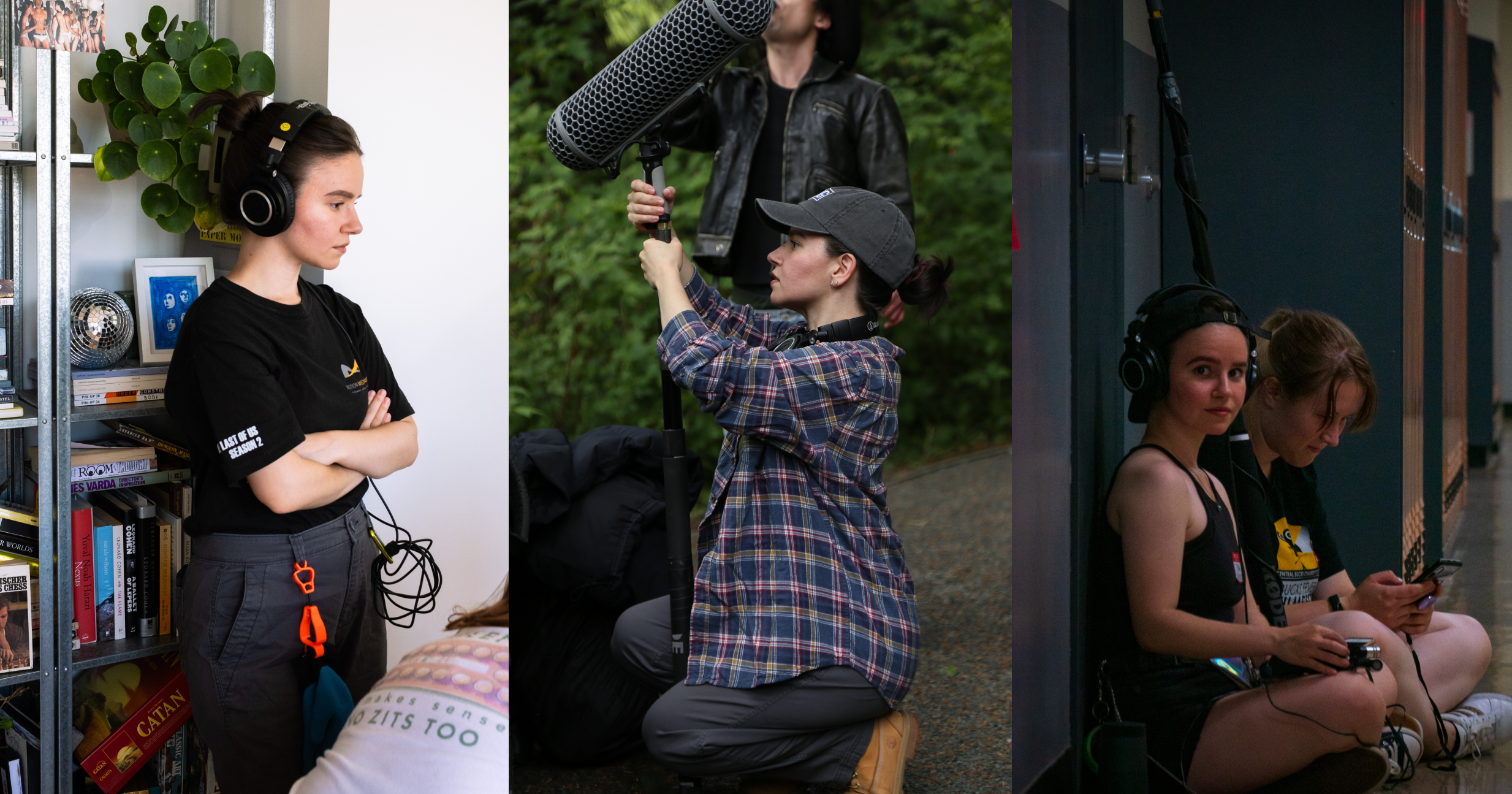
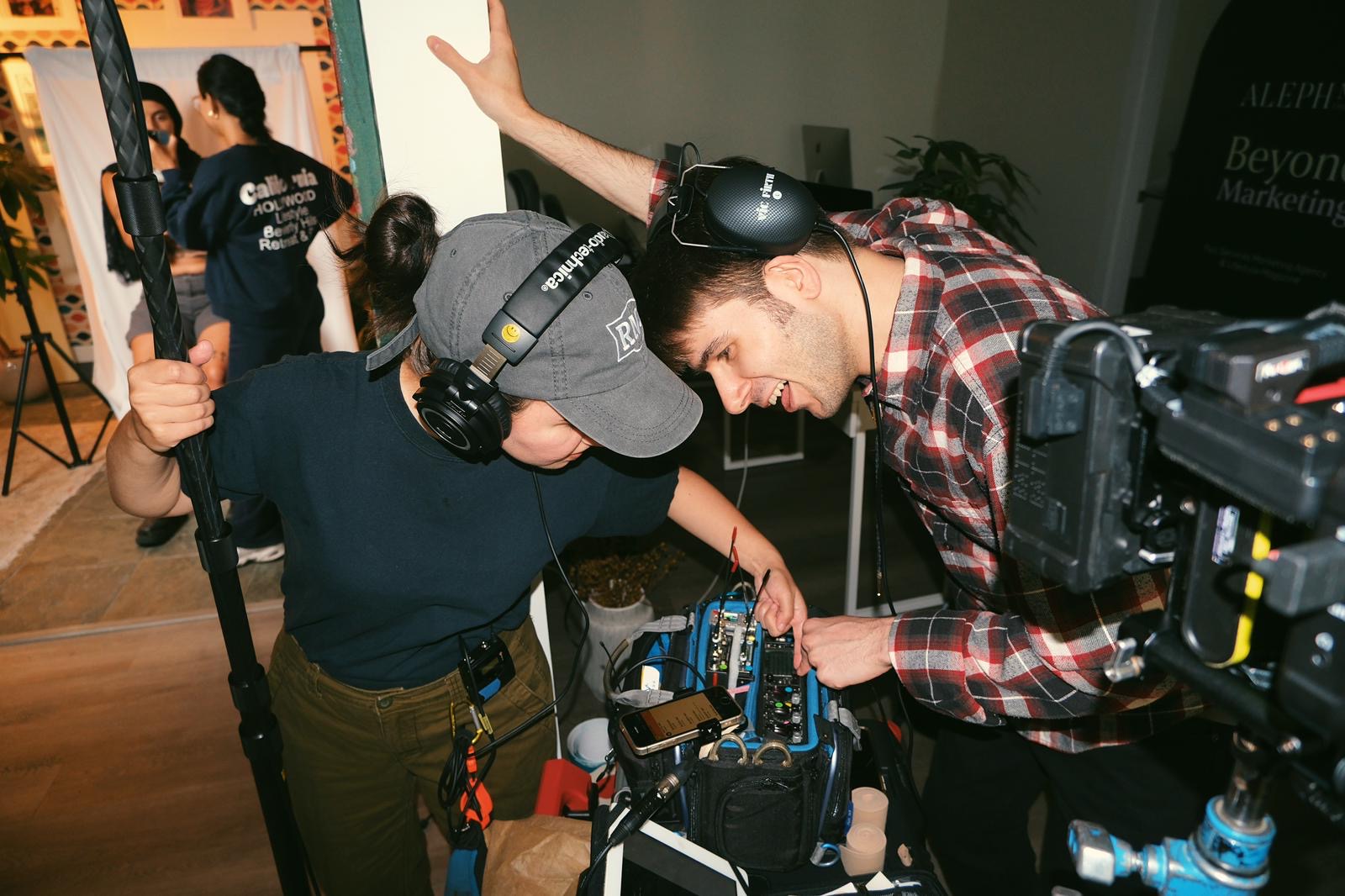
For many, the journey into a career in the film industry starts from a simple point: curiosity. That is the case for Justin Wu, an emerging sound designer whose open-mindedness helped shape his creative path. From film and TV to gaming, Justin’s persistence and passion for sound led him from Vancouver Film School to industry mentorship programs and, ultimately, to an exciting role at EA. In this Q&A, we asked Justin to share his trajectory so far, how mentorship and networking supported him, and his advice for those looking to break into the world of film and television.
What has your journey into the world of film and TV looked like?
During my time at work, I started thinking about the next steps in my career. One day, while talking with my coworkers and friends, they recommended Vancouver Film School. Several of them had studied there and it helped them advance in their own careers. I’d always wanted to pursue something in audio, especially music, so I decided to apply to the Sound Design program. After being accepted, I left my job and began studying at Vancouver Film School in 2023. I entered the program with little knowledge of audio engineering but an open mind and a strong curiosity. Over the course of a year of intensive training, I discovered the amazing world of sound in the entertainment industry! After graduating, I applied to positions across both film and video games. I also joined the Vancouver Post Alliance Mentorship Program, where I met many like-minded professionals and was paired with an executive mixer at Sharpe Sound Studios. After a year of applying and networking, I finally landed an opportunity with EA, working in audio and movies, an achievement made possible thanks to Vancouver Film School and the incredible connections I built along the way!
Tell us about your experience with Creative Pathways™, and how it helped you along the way.
Creative Pathways™ has been amazing! They’ve been incredibly resourceful and attentive in supporting emerging talent across the industry. Through Creative Pathways™, I was introduced to the Vancouver Post Alliance Mentorship Program, which opened the door to connecting with many industry professionals and expanding my network!
What drew you to sound design? What is the most rewarding aspect of it to you as a creative professional?
The blend of creative and technical, where art and technology meet. Sound builds worlds. It shapes how an audience feels and how they interpret the environment. Take horror films, for example: mute the audio and you lose all the suspense and scare factor. It’s the tension created through sound that makes a horror movie truly terrifying. Lastly, the most rewarding moments in sound design are the big ah-ha discoveries. Whether in film or video games, it’s that electric feeling when something I create gives me goosebumps. If it gives me joy, others can appreciate the art as well. Even though sound is often underappreciated or overlooked, it elevates every experience, no matter the medium. A world without sound is like a body without a soul!
Looking ahead, what kinds of projects or roles are you most excited to pursue?
I think the beauty of being a sound designer lies in the ability to diversify your portfolio, especially when branching into a growing industry like video games. I’m most excited about transitioning into a producer or audio artist role within the gaming world. Though they are competitive, not impossible! Lastly, I’d also love to return to film someday, as I loved the creative process of crafting sound as well!
What would you say to someone who’s thinking about starting a career in film and TV?
Keep applying, no matter what the opportunity is! You never know where it might lead. In the meantime, keep honing your craft and exploring new ways to share your skills with the world. Every step brings you closer to your goals. Don’t be afraid to connect with others and seek feedback, it’s essential for building a stronger mindset and improving your art. As I always remind myself: “Every expert was once a beginner!”
Learn more about Creative Pathways™ programs here.
The film industry continues to evolve with new voices, fresh perspectives, and emerging talent shaping its future. For many aspiring filmmakers, breaking into the field requires not only creativity but also perseverance and community support. From discovering a love for visual storytelling in high school to making his own short films, Hugh Liu is building a path toward a career in filmmaking. He shared with us how his background and early experiences shaped his perspective, what diversity and inclusion mean to him as an emerging filmmaker, and the stories he hopes to bring to life on screen.
Can you tell us about your background and how you began pursuing a career in the film industry?
I was born in China and immigrated to Canada when I was 13. My passion for visual storytelling began in my senior year of high school, when I first took a photography class. Later, in college, I developed a deeper interest in filmmaking. I started out filming small projects with a GoPro Hero 6 and gradually transitioned into making short documentaries and narrative short films.
What does diversity and inclusion in the film industry mean to you, especially as someone starting out?
To me, diversity and inclusion mean creating an open, supportive, and respectful workspace for everyone, regardless of their background. As someone just starting out, I’ve seen how difficult it can be to enter the industry, which often feels closed off and dependent on personal networks. Coming from an Asian background, I believe it’s especially important to build spaces where emerging filmmakers from all communities can access equal opportunities and grow their voices.
What drew you to Creative Pathways™, and what stands out from your time with the Creative Pathways™ Team?
I became aware of the Creative Pathway™ initiative when I was in the Warner Bros Access Canada Program and was invited to some of Creative BC’s events. I was drawn to Creative Pathways™ because it’s an accessible and welcoming platform for emerging filmmakers who want to break into the industry. Through them, I’ve been able to receive guidance, stay updated on current industry trends, and connect with supportive professionals. The Creative Pathways™ team stands out for their friendliness, clear communication, and genuine dedication to helping new talent find their footing.
Looking ahead, what kinds of projects or roles are you most excited to pursue?
In the future, I hope to produce and direct my own feature film. I have stories I’m passionate about sharing—stories that reflect both personal experience and universal emotion. With continued growth, experience, and support from the industry, I aspire to achieve my dream of creating meaningful films that connect with audiences on a deeper level.
Learn more about Setwork and Creative Pathways™ programs here.
With more than 300 roles on a film set in addition to VFX, animation, post-production, and film-adjacent careers, there are countless ways to build a career in the motion picture industry. The Voices from the Field series highlights professionals across departments to showcase the variety of paths into film and the unique contributions they make behind the scenes.
In this Q&A, we spoke with Nicole Oguchi about her work as a line producer, from the beginnings of her career to present day as the Head of Physical Production at Omnifilm Entertainment. Originally planning to pursue law, Nicole discovered her passion for filmmaking after taking a film theory class at UBC, a decision that set her on a new and unexpected path. Since then, she has built a dynamic career, collaborating with legendary filmmakers and supporting a wide range of productions. Here, Nicole shares insights from her journey, from the early encouragement that inspired her shift into film, to the challenges and rewarding moments that continue to fuel her love for the industry.
Can you tell us a bit about your background and what inspired you to pursue a career in the film industry?
My path into film wasn’t a straight line. I was studying English and Psychology at UBC, planning to go to law school, when I took a film theory class as an elective — mostly out of curiosity. That class was taught by Professor John Newton, and he really opened my eyes to a side of storytelling I hadn’t considered before. He encouraged me to apply to the UBC film program, and that set things in motion.
At the time, I still thought law school might be in the cards, but the more time I spent in the film program, the more I realized how much I enjoyed the process of filmmaking. In my final year, I got a job as a camera trainee on a feature film, and from that point on, I never really looked back. I eventually transitioned from camera into the production office, working my way up from coordinator to supervisor, then UPM, and ultimately line producing a Canadian television series.
That early encouragement from Professor Newton helped me realize I had a natural fit for this work — and once I found that sense of creative momentum and collaboration, I knew I was in the right place.
How does your role help shape or support the overall storytelling process on a production?
Now that I’m at Omnifilm Entertainment, my role allows me to have a direct hand in shaping the types of stories we want to tell and how we tell them. I help define the creative vision for our projects and ensure that what we produce aligns with the values and identity of our brand. That means being intentional about the voices we amplify, the kinds of narratives we pursue, and how those stories connect with an audience.
Early in my career, I had the opportunity to work with some of the legends of film — people like Spielberg, Cameron, Burton, and Gilliam — and watching them work was like a masterclass in visual storytelling. I also learned just as much from working closely with Canadian storytellers and emerging directors who brought fresh, distinct perspectives.
That mix of experiences really shaped how I approach my role today: part of it is creative intuition, but a big part is recognizing talent, protecting the core of a story, and building the right environment around it so it can thrive.
Can you share a project or moment in your career that reminded you why you love this work?
Working with Steven Spielberg was a true career highlight and a moment that reminded me why I love this industry. I had previously worked with him when he was an executive producer on a series, but getting the chance to collaborate with him as a director was something else entirely. It was also my second time working with Frank Marshall, another legend whose leadership and knowledge I deeply respect.
From the studio to the producers to the department heads, every part of that production was operating at the highest level. Even with the typical challenges that come up on any set, there was this shared sense of purpose and professionalism that came from working with creatives who are truly masters of their craft. It was one of those experiences where you’re constantly learning — not just about filmmaking, but about how to lead, collaborate, and elevate the work. It reminded me how powerful this medium can be when the right people come together with a clear vision.
What has been one of the most creatively rewarding challenges you’ve faced on a production, and how did you approach it?
One of the most creatively rewarding challenges I’ve faced was working on the directorial debuts of Casey Affleck and Anna Kendrick. Both films had limited budgets, but these were artists who had spent their careers working with some of the best filmmakers in the world — so their expectations, understandably, were high.
The challenge was: how do we support that creative vision with a fraction of the resources? The approach was all about collaboration and trust. I was fortunate to bring on incredibly skilled crews — people who usually work on major studio productions with big budgets— and they came onboard out of respect for Casey and Anna. They pulled in favours, put in their own time, and brought real heart to the work.
Seeing everyone rally to help first-time directors bring their vision to life — and doing it with such generosity and care — was a reminder of why I love this industry. It showed me that creativity isn’t just about budget; it’s about commitment, resourcefulness, and building the right team.
In your experience, what are some small but impactful ways teams can make film production more welcoming for everyone?
In my experience, it’s often the small, consistent actions that create the biggest impact in making a production more welcoming. Taking the time to get to know the crew, acknowledging good work no matter the department, and creating an environment where people feel comfortable speaking up — those things really matter.
One thing I’ve always tried to do is be accessible to the crew, no matter their position. Whether someone’s just starting out or has years of experience, they should feel like they can ask questions, offer ideas, or raise concerns. That kind of openness goes a long way in building trust and morale.
Hiring practices also play a role — bringing in people from diverse backgrounds, giving chances to emerging talent, and being intentional about who’s at the table helps create a more inclusive environment. At the end of the day, a welcoming set is a better set — people do their best work when they feel respected and part of the team.
What’s one piece of advice you’d offer to someone just starting out who’d like to work their way up to a career position like yours?
One piece of advice I’d offer is to always stay open to learning — even when something feels outside the scope of your job. Some of the most valuable lessons in my career came from saying yes to roles or tasks that weren’t part of my original plan. Whether it was jumping into different departments, or working across different formats and budgets, that range of experience became a huge asset.
If you can, try to work on a mix of projects — studio films, indie features, television, Canadian content, and with emerging producers and directors. Each one teaches you something different about how to problem-solve, collaborate, and navigate the business. The more diverse your experience, the more adaptable and valuable you become — and that’s what opens doors in the long run.
Breaking into film and television takes more than just talent, it also requires initiative, resilience, and a strong sense of direction. For emerging filmmaker Piedad Aristizabal, that journey started in Colombia, where a love for storytelling set the stage for a career behind the scenes. After film school, she gained hands-on experience across a variety of roles, gradually building the skills, confidence, and connections needed to thrive on set. Piedad brings a thoughtful, collaborative approach to every production. We spoke with her about her evolving role in the industry, how programs like Creative Pathways™ and Setwork helped shape her professional growth, and the kinds of stories she’s most excited to tell.
Can you tell us about your background and how you began pursuing a career in the film industry? I am originally from Colombia, where my passion for storytelling and visual creativity naturally led me to pursue a career in the film and television industry. My journey started with studying Production for Film and Television, which gave me essential skills for behind-the-scenes work—such as scheduling, coordination, and understanding on-set procedures. After film school, I began working as a Production Assistant and worked with Background, placing them on set, and later took on roles including Assistant Director for television productions in Colombia and Canada. These early jobs provided me with practical experience on set and taught me the importance of strong communication and organization to ensure smooth operations.
What does diversity and inclusion mean to you in the film industry, especially as someone starting out?
Inclusion and diversity are all about valuing what makes people different. It’s about embracing all the different backgrounds, experiences, viewpoints, and ideas that make each person unique. When we give everyone a fair shot, we create a fun, supportive, and respectful workplace.
What drew you to Creative Pathways, and what stands out from your time with the Creative Pathways Team?
Creative Pathways serves as a vital resource for aspiring film professionals, offering comprehensive information about opportunities in Canada. It not only provided detailed information about available opportunities but also helped me better understand the roles and pathways within the industry.
What stands out most from my time with the Creative Pathways team is the personalized support I received. They helped me build a stronger resume tailored to film industry standards and connected me with a growing network of professionals. Their guidance gave me the confidence and tools. I’m truly grateful for their encouragement and the sense of direction they provided.
Through Setwork, what was your role on Wild Cards 2, and how did the project contribute to your growth as a crew member? My role on Wild Cards 2 was a Production Assistant, and being part of a fast-paced TV series taught me the value of reliability and professionalism in building trust with a crew. It was an environment where I had to stay alert, take initiative, and support the team in whatever was needed, skills that I continue to carry forward into every new project.
In your opinion, what impact do programs like Setwork have on early-career professionals in film and television?
Working as a TAD through Setwork gave me real, hands-on experience with how a set actually runs. I have learned quickly how important good communication and organization are to keeping everything on track and being ready for long hours. Programs like Setwork are a game-changer for people just starting in film and TV because they give you real-world experience that you just can not get in film school. Some things you really have to be on set to learn.
Looking ahead, what kinds of projects or roles are you most excited to pursue? Looking ahead, I’m most excited to work as a first Assistant Director and eventually lead my projects as a Director. I’m especially interested in directing documentary and TV show projects that tell real stories and connect with audiences in a meaningful way. Sharing my knowledge and experience with others is also important to me as I move forward in my career.
Learn more about Setwork and Creative Pathways™ programs here
There’s no fixed route into film and television, especially when you graduate into a global pandemic and find your footing during a historic industry shutdown. For one Vancouver-based creative, those early hurdles didn’t deter, they became the groundwork for a flexible, multidisciplinary career built on persistence, curiosity, and a deep respect for the collaborative engine that powers every production.
With hands-on experience across directing, screenwriting, sound, and production logistics, they’ve charted a course that reflects both the realities and the possibilities of breaking into the screen industry today. We sat down with program alumni Tina Nowarre to discuss how programs like Creative Pathways™ and Setwork shaped their journey, and what they’d say to anyone just starting out.
What has your journey into the world of film and TV looked like? My journey into the world of film and tv in Vancouver has been a rewarding albeit tricky one. Having completed film school during COVID, then graduating into the uncertainty of the film strikes and global climate, timing has been challenging, but it has taught me about the resilience of the indie and commercial film industry in this city. I liken my experience to something of a ‘filmmakers’ bootcamp’, as the very beginning of my career has been peppered with obstacles that have only taught me to be adaptable and open-minded, which I find is a benefit in this industry! I’ve been fortunate enough to find programs like Creative Pathways™, Setwork, and Warner Bros. Access to Action, which have all been unparalleled resources for someone starting out in a particularly complex time.
Tell us about your experience with Creative Pathways™ and how it helped you along the way. My experience with Creative Pathways™ has been exceptionally positive, and I cannot recommend them enough as a resource and base for all of your industry queries or concerns. Whether it be the updates about in-person networking events for other program participants and BC film workers or newsletters regarding relevant work opportunities or training sessions, I’ve thoroughly enjoyed being part of a community that feels embracing, supportive, and up-to-date on what’s happening in the city’s workforce. Not to mention the open door to communication whenever I’m looking for clarity on any topic!
In your view, why does a program like Setwork matter to the future of the film and TV industry? In my opinion, programs like Setwork are invaluable and key to the success and growth of the industry in Vancouver, and in the industry in general. Having a concise, approachable program that simplifies what can often become the overwhelming process of searching for entry-level work is such a stellar opportunity and one that I believe more people with an interest in this career should have access to. I’ve gotten some work days through Setwork, all of which were very positive, seamless experiences, and I find that having any sort of support in the very beginning of your film journey can make all the difference in how you view the industry. Film can feel like a massive, unreachable world, but it’s programs like Setwork that lower that pedestal and open the door wide enough for the work to feel attainable and, most importantly, rewarding and sustainable.
You have worked across several disciplines in film, including directing, screenwriting, sound, and production. Which of these roles do you find most fulfilling? As someone who regularly works a myriad of positions, including directing, screenwriting, sound, and locations, I’ve found that having a good foundation in a multitude of positions and departments has only ever acted as a benefit to my work ethic and my knowledge across the board. I think that’s a key element to working in film long-term, having at least a base knowledge across departments to really understand the value of all the cogs in the machine. I find all of my disciplines to be rewarding in different ways, so it’s difficult to pinpoint which is the most fulfilling. Off the top of my head, I find my work in location sound and sound design to be incredibly gratifying because quality sound is the pillar of a great film. Sound feels like its own subplot to any story, as it carries a narrative and a tone that can completely shift the audience’s experience. Though of course, I do also love screenwriting and directing my own work, and I find that collaboration with a group of skilled creatives immensely enriching. And honourable mention to being a locations PA, the unsung heroes of all productions, if that doesn’t sound too pompous, but man, working with a strong locations department on a complex show is unmatched–as trivial as some tasks may seem, they all act as oil to the vast mechanics and wheels of a production.
How has that process shaped the way you collaborate on set? As previously mentioned, I find that my multiple disciplines across departments shape the way I view the collaborative process of filmmaking, and I find that I have a stronger understanding of expectations, time management, and what’s needed to support a solid day of work. My sound work helps me be a better locations PA, as there are more things on my radar that I can flag if needed having been in the sound recordist position, and my work as a locations PA makes me a better director because I can quickly delegate tasks that are relevant and supportive, and I have a stronger grasp of the cadence of an effective production. And of course, all of these positions improve my writing because there is an endless bounty of life experiences, diverse characters, and inspiration to draw from simply observing and absorbing the wildly intricate, ever-fascinating, and unparalleled world of a film set.
What would you say to someone who’s thinking about starting a career in film and TV? Something that I would say to someone looking to start a career in film and tv is that as long as you’re a personality that enjoys the process and progression of building up to where you want to be, it’s an extremely fulfilling path. Most everything in film, from what I’ve experienced, is playing the long game and working towards a personal or career goal, and that’s unique to every individual. I think there’s a beauty in that process, and there is so much to experience and adapt to along the way that it turns into an exercise of personal growth, and if you’re someone who thrives in a social, rapid-paced, and often deliriously creative environment, a career in Film & TV is a fabulous choice.
Learn more about Setwork and Creative Pathways™ programs here.
We use cookies to ensure that we give you the best experience on our website. If you continue to use this site we will assume that you are happy with it.